
Chapmanesque—It’s Time for the Olympics!
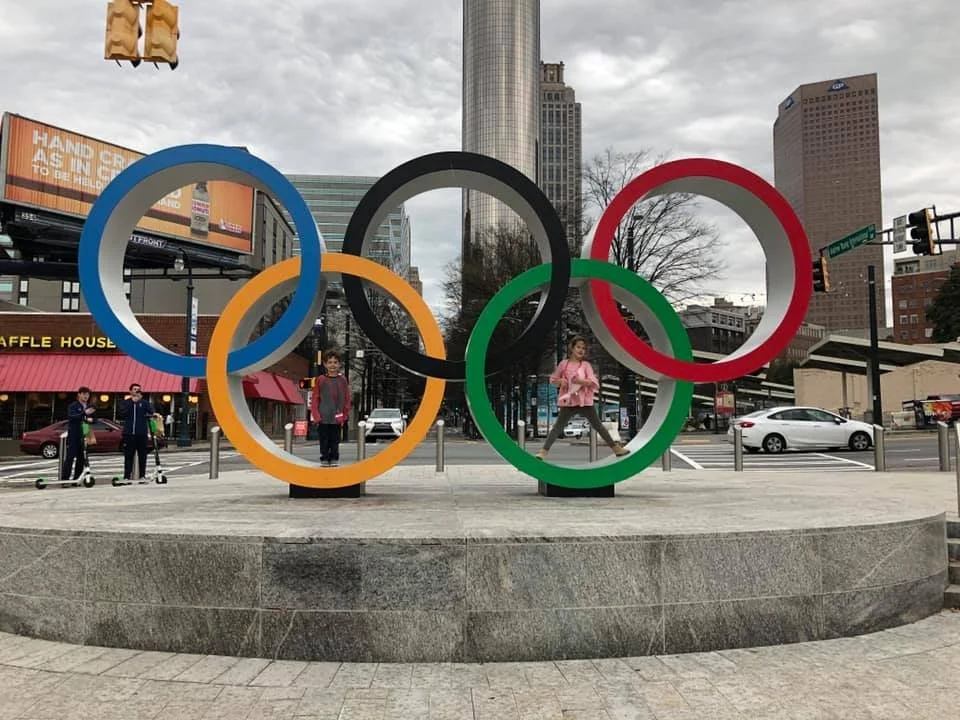
Before the world fell apart, back in the Spring of 2019, the Chapman kids took their extremely tourist pic in the Olympic Rings found in Centennial Olympic Park in Atlanta, GA.
I love the Olympics. I can’t express that to you enough. When I was but a wee lad, my parents threw me an Olympics themed birthday party, equipped with an Olympic rings cake and, if my memory serves me right, little figurines on the cake depicting Olympic sports.
Credit goes to my mother because back in the late ‘80s, there was no Google where you could just look up details that fail to be front of mind (like the color order of the Olympic rings), and Lord knows she wasn’t just going to guess. So she took her happy self down the local library to look up the proper color order in the Encyclopedia Brittanica.
The colors go Blue, Black and Red across the top with Yellow and Green on the bottom. The logo was designed by Pierre du Coubertin in 1913 and represent the first five inhabited continents interlinked together in unity. It also just happens that one of these colors appears in every flag on the globe.
So in the spirit of the Olympics, which will be hosted in Italy this year, I’ll divert a touch from some of my philosophical ramblings and focus more on the history of the very modern version of the Olympics.
Olympics Before I Existed
The 20th Century saw the Olympics through the lens of the golden age of journalism, having legendary athletic accomplishments chronicled in photos and videos for all to see.
Technically in the 19th Century, the modern Olympic Games started in Athens (of course) in 1896, marking the first time the “Olympics” were held in 1,500 years.
Then there was the 1900 Olympics in Paris that just happened to coincide with the World’s Fair as well as the first time games were held with female competitors. Not a bad track record to say that the availability for female athletes to participate happens to be in the second-ever tournament. Just saying.
The Games were held in St. Louis in 1904 where the first Gold, Silver and Bronze medals were awarded. New games added were boxing, wrestling and the decathlon. There was even a guy named Fred Lorz who was DQ’d from the marathon for riding in a car for a portion of the race (Proof here that cheating isn’t new).
London held the 1904 Games which featured the first ever opening ceremony and introduced the first winter events. These games lasted over six months and were even slightly tainted with international tensions and political protests (Again, same song, same dance, different year).
Sweden hosted the 1912 Games and were the first Games to use automatic timing devices and photo finishes as well as a PA system.
The Great War caused the 1916 Games to be cancelled and the 1920 Games were awarded to Belgium where the Olympic flag was raised for the first time with Pierre du Coubertin’s design on it. This also was the first tournament to have ice hockey as an event, won (predictably) by Canada.
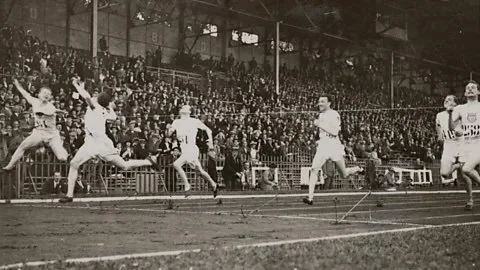
The Games in 1924 were held in France where the Olympic Village became a thing along with live radio broadcasts and the standard 50 meter pool (with lines). These Games are also the Games that inspired the film Chariots of Fire.
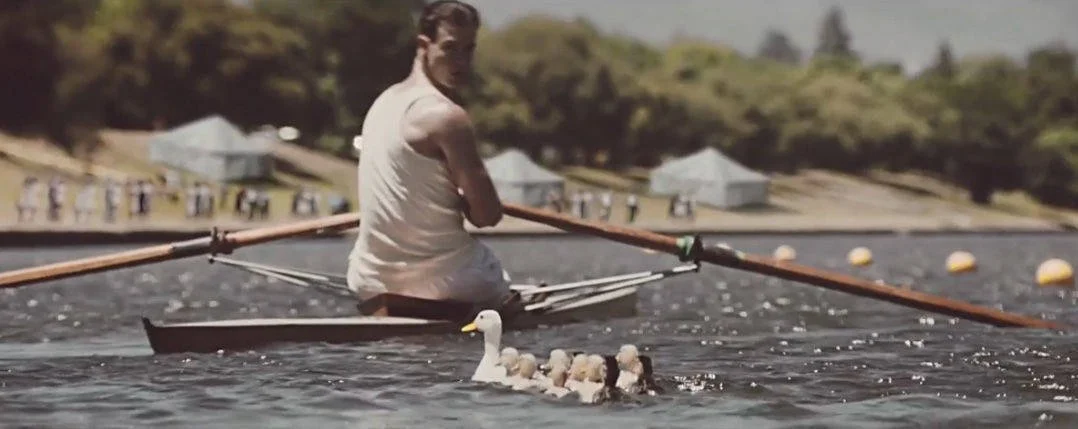
The 1928 Olympics first saw Greece come out during the Opening Ceremonies and even had Australian rower Henry Pearce stop his boat in a quarterfinal race to allow a family of ducks to go by, and he still won that heat and even the gold medal.
The 1932 Games were held during the Great Depression in Los Angeles where the world was introduced to the victory podium and the 16-day schedule. The iconic Los Angeles Memorial Coliseum played home to the games as well.
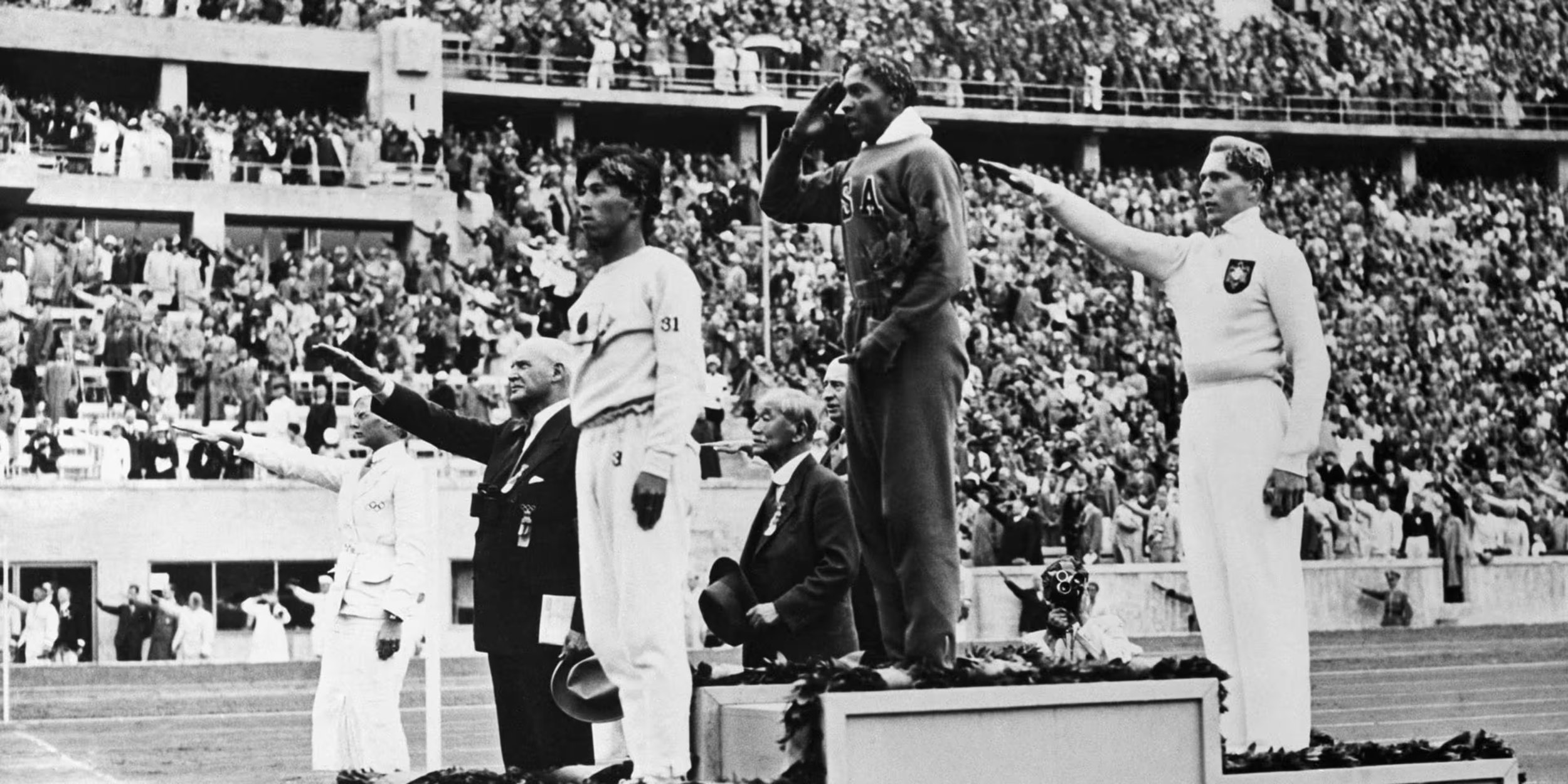
There was the 1936 Olympics where Jesse Owens told Hitler and Co. to stick it, winning 4 gold medals. This was also the same Olympic games where the University of Washington Crew Team dominated in an unlikely manner against the Nazi Germany team as well as the rest of the world (Read The Boys in the Boat. You won’t regret it). This also had the first torch relay hailing from Olympia, Greece, and even had the first televised broadcast.
The world seemed to not have learned it’s lesson back in the 1910s, and the 1940 Olympics were cancelled. due to the outbreak of World War II. The war continued, so the 1944 Games were also cancelled.
The memories of the games start to move faster with London hosting in 1948 followed by the Soviet Union’s introduction to the Games in 1952.
Australia hosted the first ever games to be held in the southern hemisphere in 1956, and Bill Russell and K.C. Jones dominated the basketball courts.
There was the 1960 Olympics held in Rome that saw Ethiopian marathoner Abebe Bikila take on gold in the 26.2 mile event. As impressive as that is, what’s even more impressive is the fact that he ran through the cobblestone streets barefoot. A young man named Cassius Clay won gold in the boxing ring.
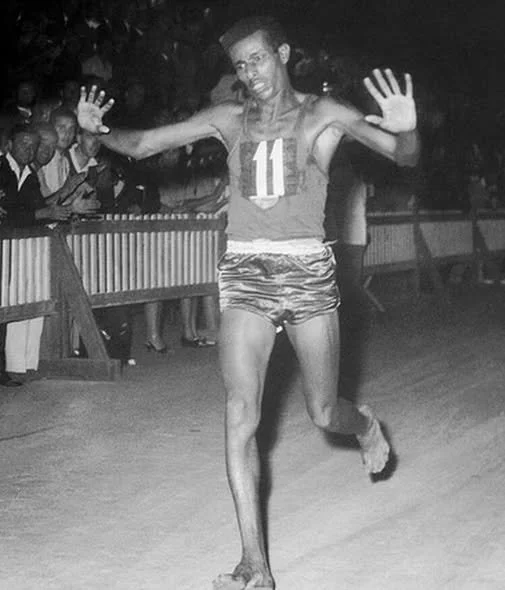
Japan was the first country in Asia to host the games in 1964, showcasing their postwar recovery. Bikila was the first marathoner to repeat as a gold medalist (this time he ran with shoes), and computers were first used to store and process results whole satellites were first used to broadcast globally.
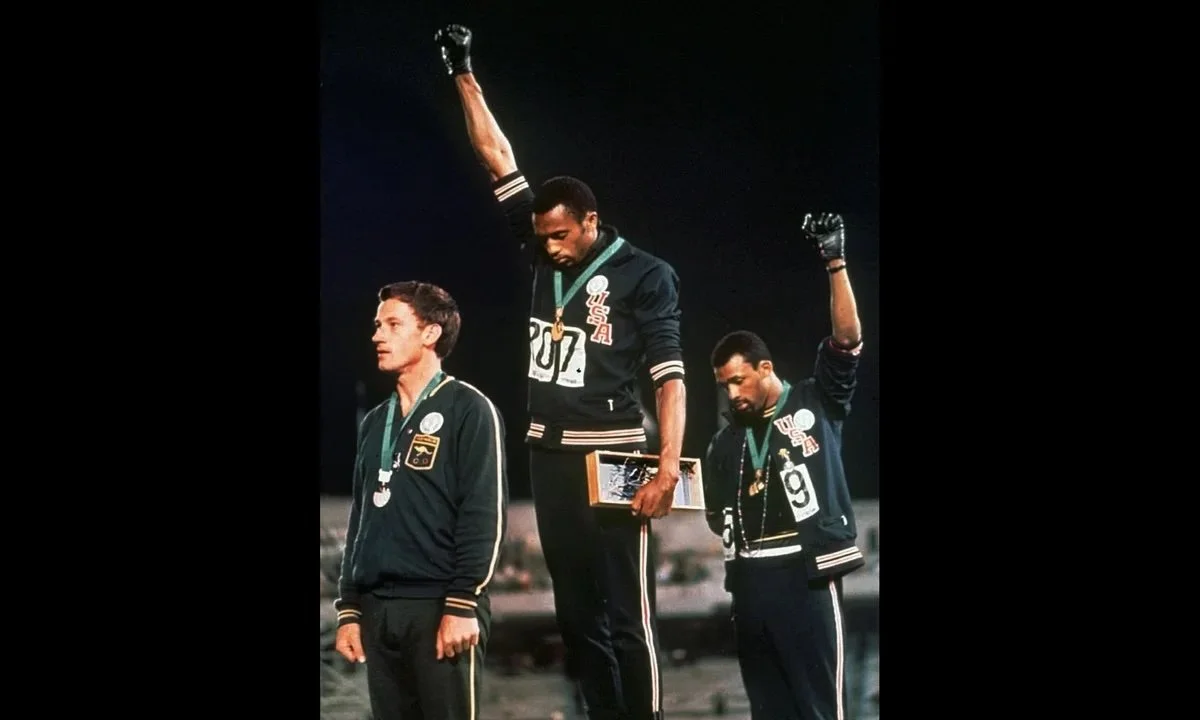
The famous 1968 Olympics held in Mexico City were rife with political tensions due to the Tlatelolco massacre and gloved fists were raised in the air by American sprinters Tommie Smith and John Carlos protesting racial injustice in the US.
Unrest continued to follow the Games as the 1972 Olympics are remeberd for the Munich Massacre where eight members of a militant group from Palestine attacked and killed two Israeli athletes and took nine others hostage. This was a turning point where live media coverage clearly became a staple for those needing breaking news.
Montreal hosted in 1976 where 14-year-old gymnast Nadia Comăneci scored the first perfect 10 and a guy named Bruce Jenner set a world record in the decathlon. Also of note, 22 African nations boycotted the games.
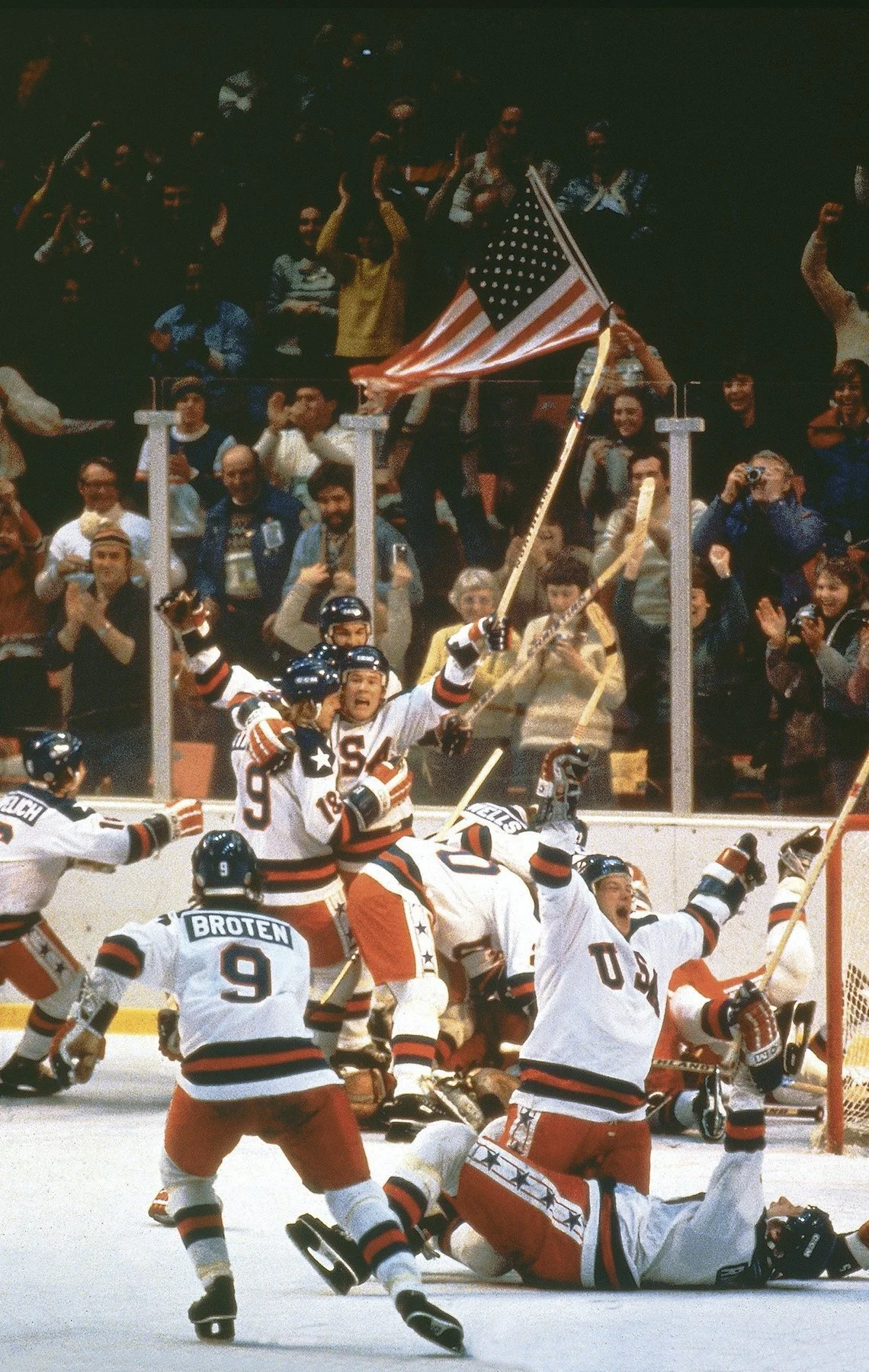
You may have been waiting for this one, but the 1980 games was where we all believed in miracles with the US Men’s hockey team took down the Soviets on their way to Gold.
Finally, the 1984 Olympics were again hosted in LA and saw Carl Lewis win four gold medals just like Jesse Owens did in 1936. The name “Mary Lou Retton” became a household name and Michael “Air” Jordan led the US Men’s basketball team to a gold medal.
Olympics Since I’ve Been Alive
You might have wondered why I wrote “finally” in that last section. Well, there are two reasons.
First, I wasn’t born until October of 1984, so the above was (literally) a recap of the modern Olympics that I could technically only appreciate in the rearview mirror.
But, there’s a second reason. The International Olympic Committee voted in 1986 to split the summer and winter games moving them to alternating sites, split evenly to ease logistics. This didn’t happen until the ‘90s, but the decision was made in ‘86, the same year that saw the first Goodwill Games instead of the Olympics.
The first ever summer specific Olympics were held in 1988 in Seoul, South Korea, with the winter portions held the same year in Calgary. For all you tennis fans, 1988 was the year Steffi Graf won the Grand Slam PLUS the Gold
In similar fashion France and Spain split duty in 1992. That’s where I first learned that “Barcelona” was really “BarTHelona.”
The four year sections are called Olympiads with summer in the first year and winter in the third year.
Added bit of info (like this whole post isn’t one big added bit of info?): The World Cup is held during the summer of the year the winter Olympics are held, allowing each nation to field a squad and have the other 3 years to participate in the various national tournaments.
So that means this year’s Olympics are the Winter Games, and the FIFA World Cup will be this summer (and I can’t wait!)
The Barcelona Games in 1992 welcomed the Dream Team for the USA in Men’s Basketball and baseball became an official medal sport (being won by Cuba…of course).
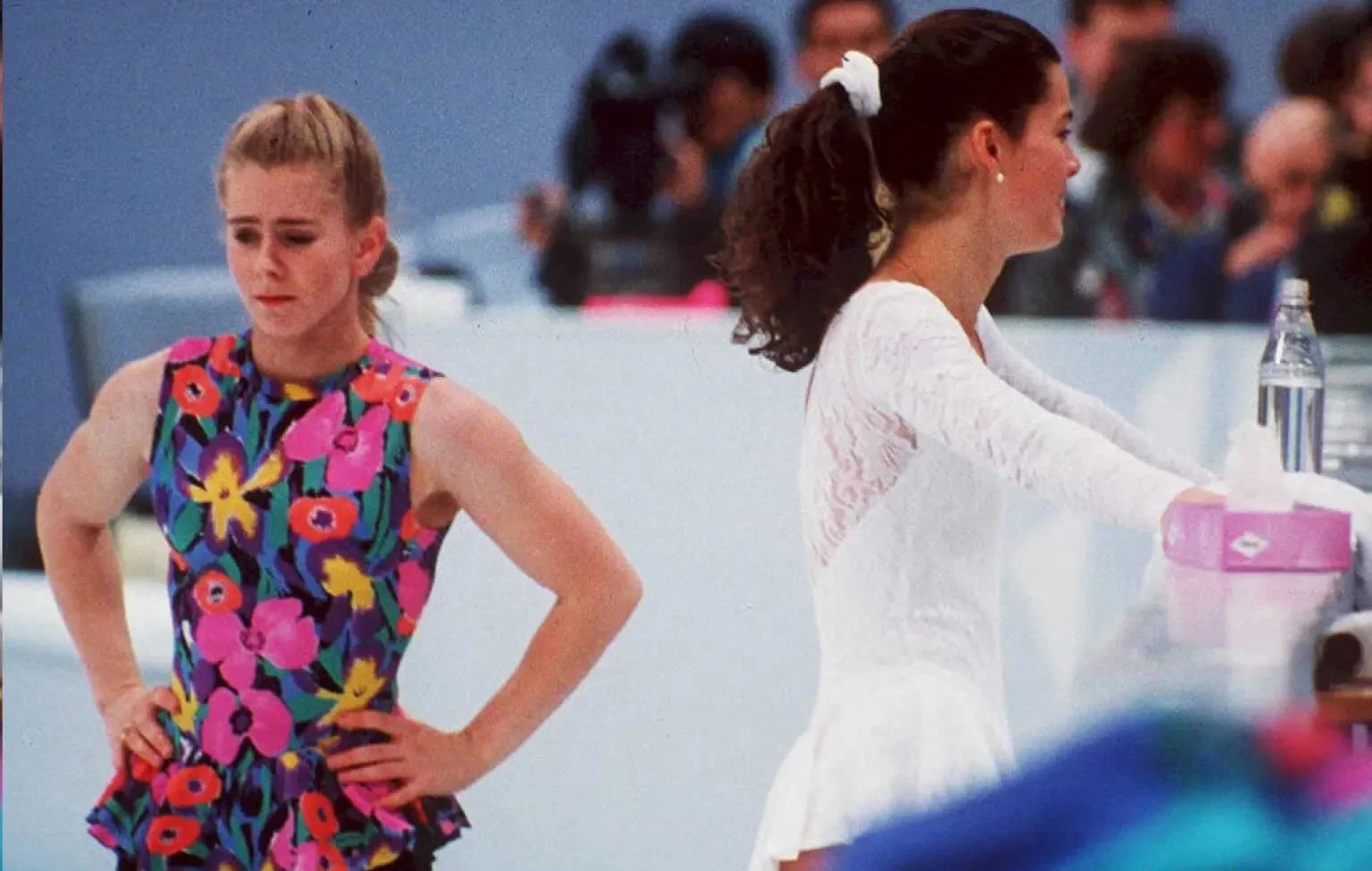
The 1994 Winter Olympics were in Lillehammer, Norway. and these Games were the first winter Games I can recall in my mind. This was the year when Nancy Kerrigan and Tonya Harding became household names. You also had Oksana Baiul win Gold over Kerrigan’s Silver in Women’s Figure Skating (WHY!!!!)
Another name sticks out in my mind from the ‘94 Olympics, and that’s speed skater Bonnie Blair. I remember singing “My Bonnie Lies Over the Ocean” with my parents as we rode the hype train.
The 1996 Summer Olympics were held in Atlanta, just 6 hours from my Mississippi hometown. This is the year that’s remembered for the bombings, for Muhammad Ali lighting the cauldron, and for Michael Johnson’s gold Nikes.
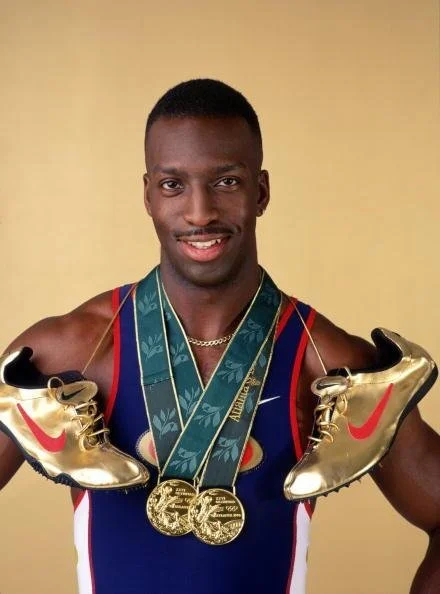
The 1998 Winter Olympics were hosted in Nagano, Japan, and saw the introduction of snowboarding. Fifteen-year-old Tara Lipinski became the youngest gold medalist in an individual winter event.
The new millennium started with Australia hosting the 2000 Summer Olympics in Sydney. A friend of mine’s father was the official physio for the US Men’s Greco Roman Wrestling team (who won gold, by the way).
Salt Lake City hosted in 2002, the first Games after the 9-11 attack.
The Olympics went home in 2004 with the Summer Games hosted in Athens. This was the year the world was introduced to Michael Phelps who won 6 gold and 2 bronze medals.
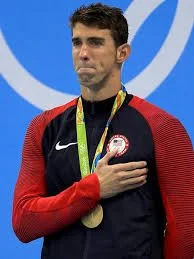
The 2006 Winter Games were in Turin, Italy, and the 2008 Summer Games were in Beijing. That year an astonishing 87 countries participated. The opening ceremonies were noted as the most elaborate and spectacular.
Canada hosted the 2010 Winter Games, and London hosted the 2012 Summer Games, where Usain Bolt and Michael Phelps dominated and become cultural icons.
The 2014 Winter Games were held in Sochi, Russia, which was pretty iconic in itself.
Brazil hosted the 2016 Summer Games, welcoming rugby sevens and golf. It also saw the first ever Refugee Olympic Team and introduced us all to Simone Biles.
The 2018 Winter Olympics were held in Pyeongchang, South Korea, and the Olympic Athletes from Russia competed independently because Russia was banned due to doping violations.
As you guessed, we’ve reached the part where we get to talk about COVID. The 2020 games were held in Tokyo, but they were pushed to 2021. It was the first time the Games were held without spectators.
Beijing hosted the 2022 Winter Games, and Paris hosted the 2024 Summer Games. If you thought the Parisians hated the Eiffel Tower, they hated the Olympic debacle even more.
And now we’re here for the 2026 Winter Games hosted in Milano Cortina, Italy.
What Am I Missing?
There are plenty of stories that I’ve neglected to include in this (extremely long) post. From the numerous Gymnastics teams to the number of skiers and sprinters and soccer players and and basketball players and so on and so forth.
But that’s why I absolutely love the Olympics. There are so many stories that you get to remember, and so many more on their way.
The 2026 Winter Olympics are scheduled to begin on Friday, February 6 and last through Sunday, February 22. I can’t wait!
Subscribe to Community Studio on Apple Podcasts or Community Studio on Spotify or wherever else you get your podcasts or catch the Community Studio Podcast in video form on YouTube.
You can also Subscribe at Substack.
