
Chapmanesque—More to that Fishbowl Mentality
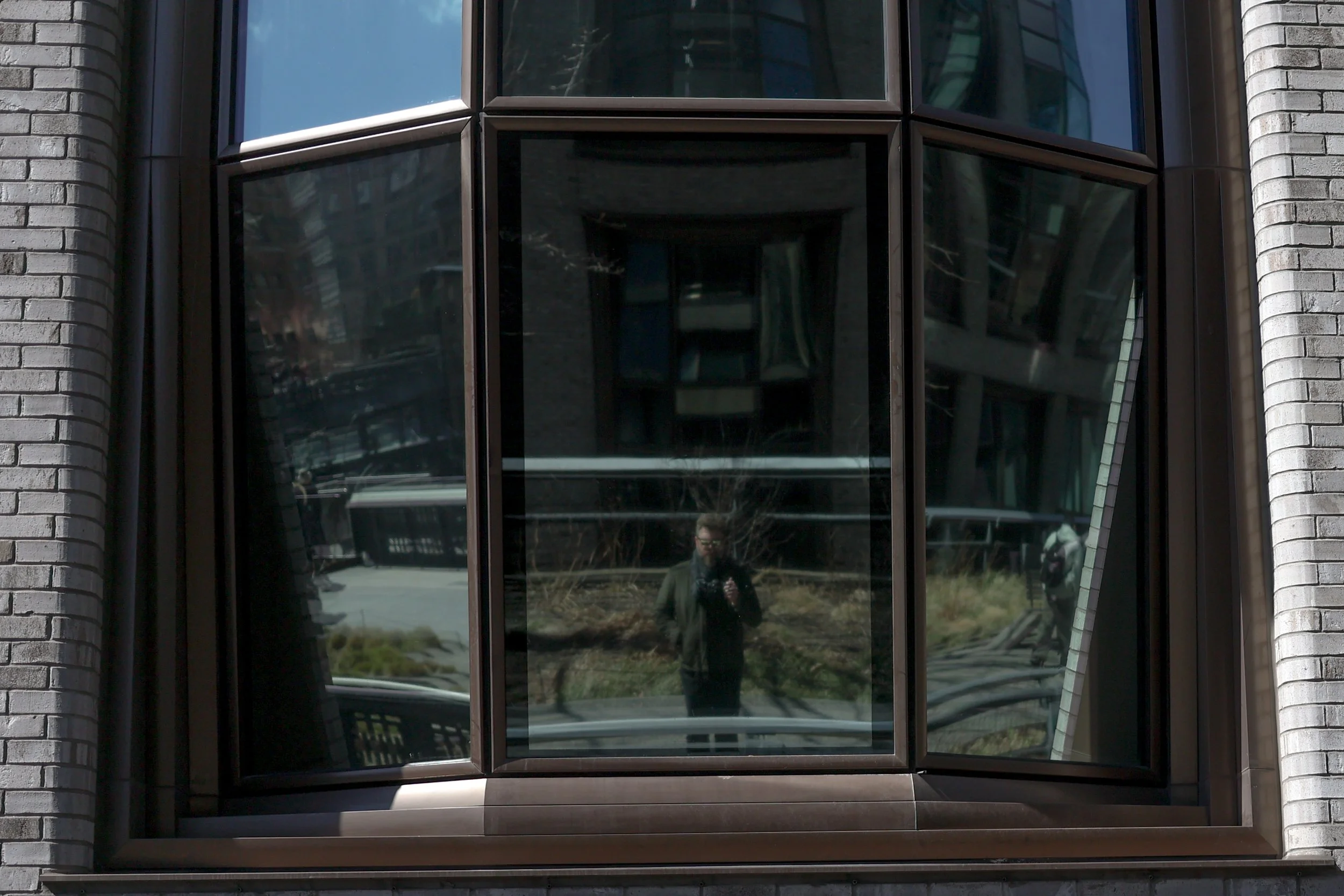
Photo of me by me from the Highline in New York City.
It’s wild how valuable travel is for a person. It puts an individual in places that can’t be found in said individual’s backyard, exposing new cuisine, new artistic expression, new cultures, new things allowing for growth.
Travel is healthy too. According to psychologist Susan Albers, mankind loves routine. The monotonous repetition doesn’t require much thought and doesn’t demand any mental capital to be spent. However efficient that may be, it’s not what our brains require of us.
“As a species, we struggle with monotony,” she explains. “When we do the same thing over and over again, it can make life feel tedious. When we get stuck in a rut like that, it reduces our cognitive performance, focus and ability to be fully present in the moment.” (Source: Cleveland Clinic)
Go read the article all of this comes from. There’s a good bit of information about what happens to our bodies and our minds when we live in a constant state of stress. Cortisol is pumped through our bodies negatively affecting our abilities to process and hold on to information as well increasing our chances to become overstimulated.
Travel is known to increase creativity, lower depression, strengthen relationships and make you generally a happier person.
Worldwide Words
The social and behavioral scientists may have this new-age empirical data to support the idea that travel is good for a person, but there are centuries worth of famous names who would say, “I already told you that!”
Mark Twain pointed out that seeing the world exposes people to many elements that are different like people and food and social norms. “Travel is fatal to prejudice, bigotry and narrow-mindedness,” Twain said, “and many of our people need it sorely.”
“The world is a book,” said St. Augustine, “and those who do not travel read only one page.”
Seems like the two of them felt that the more a person is exposed to, the better off they are and the more they grow.
Confucius saw the value in growth as well. “Roads were made for journeys, not destinations,” he said.
Socrates took it to an elemental level for the self. “Why do you wonder that globe-trotting does not help you, seeing that you always take yourself with you?”
Having the mindset that each experience fertilizes our deeper understanding of life sure does feel a lot better than the alternative.
There’s a Kings of Leon lyric that always makes me feel introspective:
I walked a mile in your shoes. Now I’m a mile away, and I’ve got your shoes.
If they journey doesn’t help you grow, it’s just in vain.
The Fishbowl is Real, but not final
There’s another round-about benefit I think is extremely valuable but requires a short period of germination and realization.
Though we all collectively make up the population of this terrestrial ball, we all are our own little center of our own little universes. It’s something we can’t help.
We’re like fish in a fishbowl, swimming round-and-round, observing what’s out there and being intimately acquainted what what’s in here.
We straddle that line of wanting more out of life while remaining thankful for the blessings that have been granted to us.
As we’re making laps in our fishbowl, there’s a real danger that we will get stuck in that motion, almost like we’ve created a current that won’t let us escape, keeping us trapped in the same-old-same-old.
What if we were to have a change of mind, a change of perspective? What if we had the power to “swim up” and out of our fishbowl? We might just realize that our little microcosms are part of something greater, that our fishbowls are inside bigger fishbowls.
Seeing the world helps us with that fishbowl mentality, allowing us to see the connections people have with each other.
There’s so much more out there that we’ve yet to experience, and experience will reiterate that the different elements making up mankind aren’t so different after all.
Subscribe to Community Studio on Apple Podcasts or Community Studio on Spotify or wherever else you get your podcasts or catch the Community Studio Podcast in video form on YouTube.
You can also Subscribe at Substack.
